How Much Does Solar Panel Cleaning Cost in Phoenix, AZ?
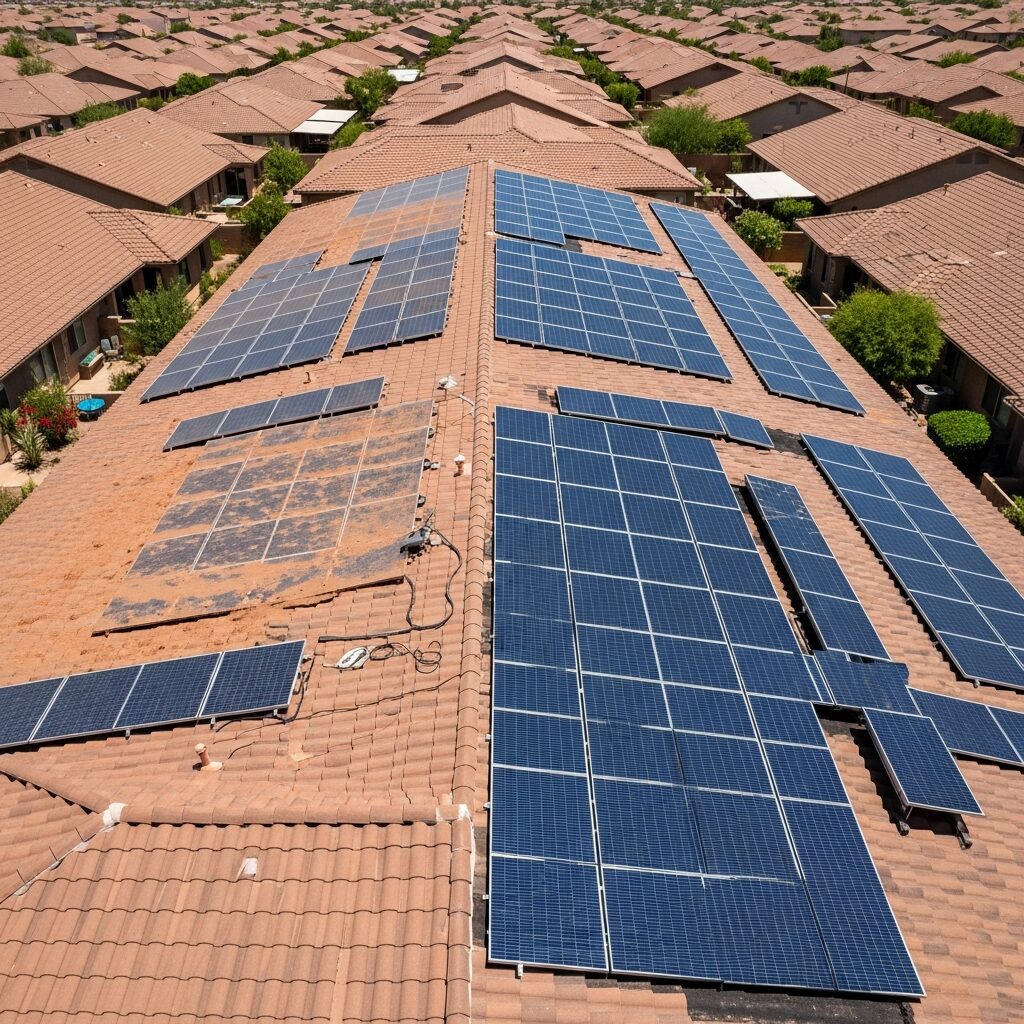
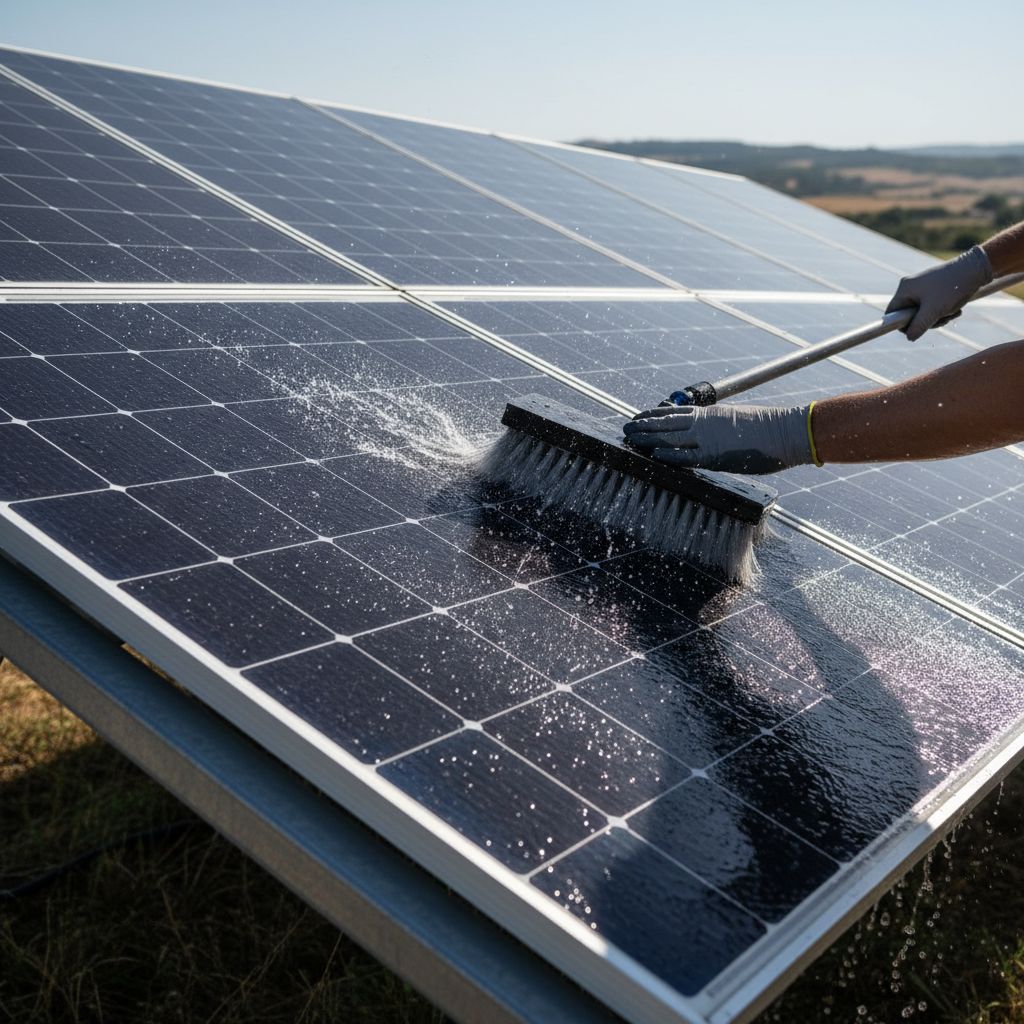
Solar is a smart move in Phoenix. We get the sunshine for it. But we also get the dust for it. Between desert wind, construction in growing neighborhoods, and monsoon season residue, solar panels can collect a film of grime faster than most homeowners expect. You might not notice it from the ground, but you’ll often see it when the light hits just right—or when rain dries and leaves a fine layer behind. So what does professional solar panel cleaning cost in Phoenix, AZ? In most cases, solar panel cleaning in Phoenix runs about $150 to $300 per visit for a typical residential system. Many companies also price it as $10–$20 per panel, with the total changing based on panel count, roof height, access, and overall condition. This guide breaks down common local price ranges, what changes the cost, how to estimate your system, and how to compare quotes so you can book with confidence. Typical Solar Panel Cleaning Prices in Phoenix If you want the fast answer first, here’s what homeowners typically see in Phoenix: Typical visit cost: $150–$300 for many residential systems Per-panel pricing: often $10–$20 per panel Small systems (8–15 panels): commonly $150–$225 Medium systems (16–30 panels): often $200–$350 Large systems (30+ panels): typically $350–$600+ Typical cleaning frequency: 1–2 times per year for many homes Annual total for most homeowners: about $150–$500, depending on frequency and system size You’ll also see a “minimum service fee” in many quotes. That’s normal. Even a smaller system requires safe roof access, setup, and professional equipment. Cost Breakdown by System Size The simplest way to think about solar panel cleaning pricing is by system size. Not because every company uses the same brackets, but because it helps you estimate what’s realistic before you request quotes. Small systems (8–15 panels): $150–$225 Smaller systems often fall close to the minimum service fee. Even if you have eight panels, the crew still has to arrive, set up for safe roof work, and complete a careful clean. These systems are common on smaller homes or homes with limited roof space. The work is usually straightforward, and the price is driven more by access than panel count. Medium systems (16–30 panels): $200–$350 This is a very common range for typical Phoenix households. At this size, panel count starts to influence price more clearly, especially if the array spans multiple roof sections. If your panels are all in one easy-to-reach area, you’re often toward the lower part of this range. If the system is split across different planes of the roof, the total may rise because it adds movement, setup adjustments, and time. Large systems (30+ panels): $350–$600+ Large systems require more time, and they may also require more careful routing for access. Some providers offer better per-panel rates at higher volume, but harder access can offset that. If your system is large and easy to reach, you can sometimes get a relatively efficient per-panel price. If it’s large and complex—multiple roof sections, steep pitch, tight edges—the total typically increases. How Solar Panel Cleaning Is Priced in Phoenix Most companies price solar panel cleaning in one of three ways. Understanding the approach helps you compare quotes fairly. Per-panel pricing Per-panel pricing is common because it feels simple. You count your panels and multiply. In reality, per-panel pricing is usually a starting point. The provider still needs to factor in roof height, access, roof type, and overall condition. That’s why two homes with 20 panels might get different totals. Flat-rate packages Many companies offer a flat-rate package for a “standard residential system.” This is usually based on typical panel count and typical access. Flat-rate can be a good deal when your system matches the norm. It can also be confusing if the quote doesn’t clearly say what is included or what triggers a higher price. When you get a flat-rate quote, ask one simple question: “Does this include my full panel count and my roof height?” Minimum service fees Minimum fees are common in Phoenix, especially for smaller systems. A minimum fee usually covers: Travel time and scheduling Roof safety setup Professional equipment and water system Cleaning time and cleanup It’s not a penalty. It’s simply the base cost of doing the job professionally. What Impacts Cost the Most in Phoenix Solar panel cleaning isn’t just about how many panels you have. In Phoenix, environment and access play a big role. Panel count and layout Panel count matters, but layout can matter just as much. A single array on one roof plane is faster than a system split across multiple roof sections. Split layouts add time because crews need to reposition and work more carefully around roof lines and edges. Roof height and accessibility Single-story roofs are generally simpler to service than two-story roofs. Height adds safety requirements and setup time, and it can limit access points. If your roof has tight access, narrow walk areas, or steep slopes, the job becomes more technical, and the price often rises accordingly. Roof type and pitch Phoenix homes vary. You may have: Tile roofing Flat or low-slope roofing Steeper-pitched sections The surface and slope affect safety and time. A roof that’s easy to move on is typically faster than one that requires slower, more controlled movement. Dust levels and panel condition Dust is normal here. But not all dust is equal. Some neighborhoods deal with heavier dust because of nearby construction, open desert areas, or more frequent wind exposure. Monsoon residue can also leave a different type of buildup that doesn’t rinse away easily. If panels haven’t been cleaned for a long time, the cleaning may take longer—especially when the buildup includes bird droppings or stuck-on residue. Equipment choice (deionized or purified water) Some companies use purified water systems designed to reduce mineral spotting. This can be a premium approach and may place pricing toward the higher end of the range. In Phoenix, water quality matters. Mineral deposits can leave marks if the cleaning process isn’t done correctly. That’s