
There’s a science to effective window washing that helps you protect finishes, reduce weathering, and prolong lifespan without harsh chemicals. Use soft, non-abrasive tools, squeegee with overlapping strokes, choose mild, pH-neutral cleaners or a vinegar-water solution, wash on overcast days to avoid streaking, and inspect seals and frames for wear while cleaning so you can address issues early.
The Importance of Window Washing
If you let grime and mineral deposits build, glass clarity and seal integrity suffer; cleaning every 3-6 months (monthly on coastal or high-pollution homes) prevents hard-water etching and reduces abrasive grit that scratches panes. Professional inspections during washes also spot seal failure, frame rot, or weatherstripping issues early, helping you avoid costly repairs and preserving daylight, thermal performance, and the aesthetic value of your property.
Benefits of Clean Windows
Cleaner windows deliver sharper views, noticeably more daylight, and lower interior dust and allergen loads, so you and your guests experience brighter, healthier rooms. You’ll also gain improved curb appeal for showings and photos; maintenance technicians report that removing grit regularly prevents micro-scratches and extends the life of seals and coatings, reducing long-term replacement expenses.
Impact on Home Value
Well-maintained windows influence first impressions and signal overall upkeep, which can affect buyer perception and negotiation leverage. You can boost listing photos and open-house appeal immediately with streak-free glass, while avoiding fogged insulated units helps you protect resale value by preventing visible defects that buyers and inspectors factor into offers.
Before listing or appraisals, document a cleaning schedule and professional receipts to demonstrate upkeep; replacing a fogged insulated glass unit typically ranges from about $150-$800 per window depending on size and frame, so routine washing that delays seal failure preserves equity. You should also use regular cleanings to trigger minor repairs-recaulking or weatherstrip replacement-so small, inexpensive fixes don’t balloon into costly replacements.
Natural Cleaning Solutions
Practical blends of common household ingredients let you tackle glass stains without harsh chemicals; white vinegar (typically 5% acetic acid) dissolves mineral deposits while baking soda acts as a mild abrasive for stuck-on grime. You can use distilled water to avoid spotting in hard-water areas, apply solutions with a microfiber and squeegee for best results, and test a small corner on coated or tinted glass first to ensure no adverse effects.
Vinegar and Water Mixture
Mix 1 part distilled white vinegar with 1 part warm water for heavy soil, or dilute to 1:3 for routine cleaning; the acetic acid cuts mineral buildup and film effectively. Spray from top to bottom, wipe with a lint-free microfiber, then squeegee each panel-this method reduces streaking and dries faster in 20-30 minutes indoors. Avoid prolonged use on low-E or specialty-coated windows and always spot-test if coatings are present.
Baking Soda Techniques
Make a spreadable paste by adding water to baking soda and apply to stubborn spots like bird droppings, sap, or paint overspray-its pH-neutralizing, mildly abrasive action lifts residue without scratching when used gently. Use a soft sponge or old toothbrush for corners, work in short circular motions for 30-90 seconds, then rinse thoroughly to prevent residue. Test on an inconspicuous area before treating large surfaces.
For more controlled results, wet the glass first, apply a thin layer of paste, let it sit 1-2 minutes on baked-on deposits, then scrub lightly and rinse with warm water; follow immediately with your vinegar solution and a squeegee to neutralize any leftover grit and produce a streak-free finish. Never use metal pads or harsh scrapers-those create micro-scratches that trap dirt and shorten window lifespan.
Tools for Effective Window Washing
As you assemble supplies, focus on durability and ergonomics: a 10-14 inch rubber-blade squeegee, a lint-free microfiber mop or sleeve, a telescoping pole rated to 15-20 ft, and a five-gallon bucket with grit guard. Professionals replace squeegee blades every 6-12 months, so track blade wear to maintain streak-free glass.
Essential Equipment
Select 10-14 inch squeegees for standard windows and 6-8 inch models for tight panes; use 300-400 GSM microfiber cloths for final buffing and a scrubber sleeve for soapy action. Include a 6-8 ft A-frame ladder for single-story work and a pole system for multi-story access, plus a spray bottle of distilled water for spot checks and a small scraper for paint or adhesive.
Eco-Friendly Alternatives
You can replace commercial detergents with a 1:10 white vinegar-to-water solution for routine cleaning and add 1 teaspoon of liquid castile soap per liter for greasy glass. Biodegradable enzyme cleaners target organic grime, while microfiber and squeegees reduce chemical reliance by mechanically removing dirt and oils.
For practical application, mix 1 cup white vinegar with 10 cups warm water in a bucket, apply with a microfiber mop, squeegee top-to-bottom, then buff with a dry cloth to avoid streaks. For mineral deposits, apply full-strength vinegar on a microfiber pad for 1-2 minutes before gentle agitation and a clear-water rinse; always test on a small area to confirm compatibility.
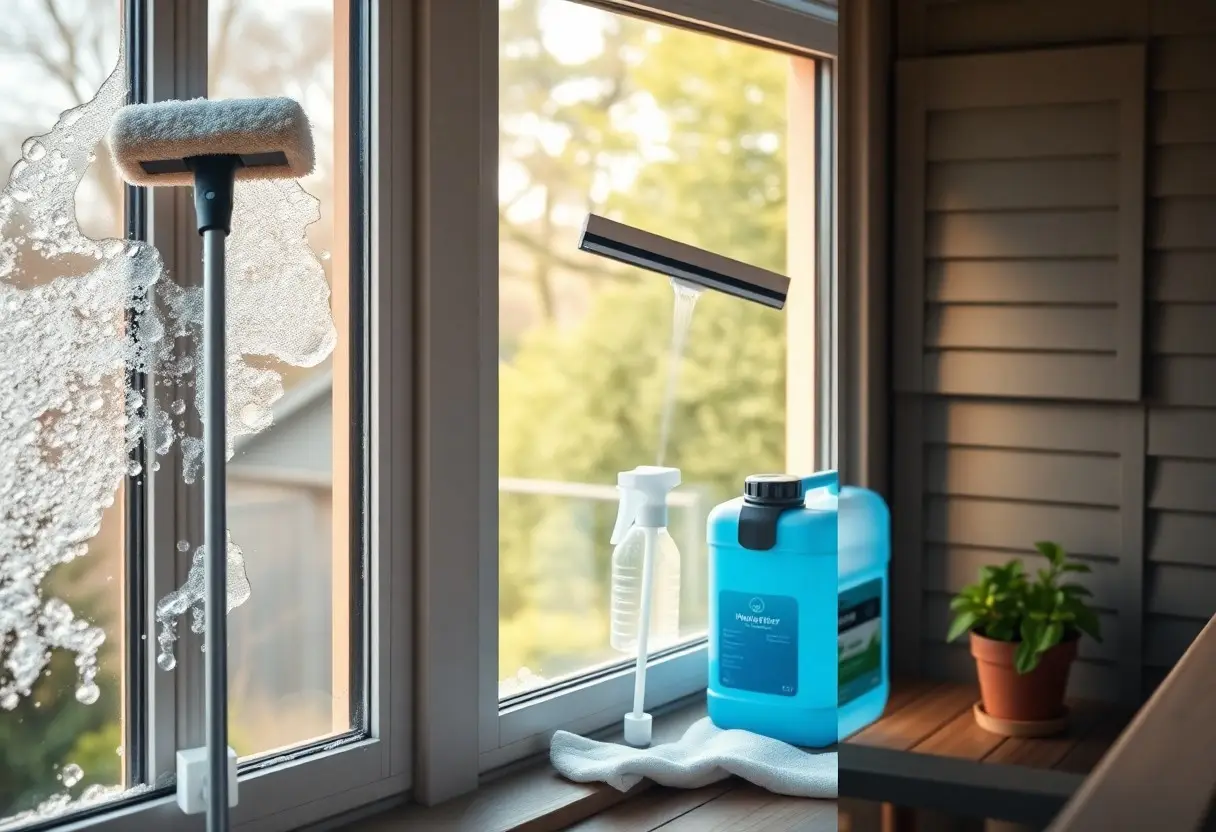
Step-by-Step Window Washing Process
Quick Step-By-Step
| 1. Pre-rinse | Spray low-pressure water to remove loose dirt and cobwebs; avoid pressure washers on sealed units. |
| 2. Remove screens | Take out and soak screens in a mild detergent mix (1 tbsp dish soap per 1 gal water) while you clean glass. |
| 3. Apply solution | Use a natural mix (1 cup white vinegar : 3 cups warm water; add 1 tsp dish soap for greasy panes). |
| 4. Agitate | Scrub with a microfiber pad or washer to lift deposits before squeegeeing-work in 2-3 ft sections on large panes. |
| 5. Squeegee | Use a 10-14 in squeegee; pull straight down or use an S-pattern, wiping the blade after each pass to avoid streaks. |
| 6. Detail | Dry edges and tracks with a lint-free cloth, brush out debris from tracks, and vacuum if needed for frames. |
| 7. Final buff | Polish with a dry microfiber or lint-free cloth; inspect from different angles to catch missed spots. |
Preparing Your Windows
Before you start, remove screens and wet-soak them, vacuum tracks, and inspect seals for damage; work when temperatures are 50-70°F to prevent rapid drying, and protect nearby plants with drop cloths-doing prep properly saves 20-30% of your cleaning time on average and prevents grit from scratching the glass.
Techniques for Streak-Free Finish
Adopt a consistent squeegee technique: hold the blade at about a 30-45° angle, make overlapping strokes, and wipe the blade after each pass; use distilled or deionized water in hard-water areas and avoid cleaning in direct sun to minimize streaks and filming.
For added precision, start at the top-left corner and work right-to-left on horizontal panes or top-to-bottom on tall units, finishing with a single vertical pass to remove edge runoff; keep a 10-14 in squeegee and two microfiber cloths-one for blade wipes, one for final buff-and change cloths when they darken to maintain clarity.
Seasonal Window Care
As seasons shift, adjust your window routine: clean at least twice a year-spring and late fall-and inspect seals after extremes like heat above 90°F or freezes below 20°F. You should check for 1-2 mm gaps, fogging between panes that signals seal failure, and surface etching from acid rain or road salt. Prioritize ventilated cleaning, avoid pressure-washing older seals, and document issues with photos to track degradation over time.
Spring and Summer Tips
During spring and summer, you should tackle pollen, sap and road grime by washing frames weekly during high-pollen weeks and deep-cleaning once a month; a 1:10 white vinegar-to-water mix dissolves mineral film without harsh chemicals.
- Brush tracks and vacuum debris to prevent abrasion
- Squeegee with 2-inch overlaps for streak-free results
- Remove and wash screens; patch tears larger than 10%
The extra attention during the growing season prevents abrasive buildup and reduces permanent etching.
Fall and Winter Considerations
As temperatures fall, focus on seal inspection and condensation control: check seals 1-2 times before sustained freezes, use weatherstripping to close gaps over 2 mm, and set indoor humidity to 40-50% to limit interior fogging and mold. You should clear gutters and downspouts to prevent ice dams that force water toward window frames, and avoid pouring hot water on frozen glass to prevent thermal shock.
If you spot persistent fog between panes, that indicates IGU (insulated glass unit) seal failure and can reduce insulating performance by up to 30%; plan for resealing or IGU replacement rather than temporary fixes. For short-term mitigation you can apply clear insulating film rated R-2 and add foam or felt sash seals to reduce drafts, but schedule a professional evaluation if moisture or drafts persist for more than two weeks.
Preventative Maintenance for Windows
Treat window upkeep as scheduled care: inspect seals and hardware at least every 6 months, clean tracks and weep holes quarterly, and lubricate rollers and hinges with a silicone spray twice yearly. You should re-caulk exterior joints every 5-10 years depending on sun exposure, and replace deteriorated weatherstripping to cut air infiltration and extend IGU life by several years.
Applying Protective Coatings
Choose hydrophobic or nano-ceramic coatings to repel water and reduce mineral spotting; professional products can extend effective cleaning intervals from 3-6 months to 12-18 months. Apply to thoroughly cleaned, dry glass with a microfiber applicator in thin, overlapping passes, allow a 24-hour cure, and plan reapplication every 12-24 months or after severe weather.
Regular Inspections
Schedule detailed inspections every 6 months and after storms: look for condensation between panes (a sign of IGU seal failure), cracked glazing, missing caulk, frame rot, and stiff hardware. You should note sash alignment and test locks and balances so small issues-like a failing sash balance-are fixed before they cause glass or frame damage.
Use a simple checklist during inspections: perform the dollar-bill draft test on sashes, shine a flashlight at an angle to reveal hairline seal breaches, check for mold or soft spots in wood frames, and snap photos with dates to track progression. Set calendar reminders and prioritize repairs that affect water intrusion or airtightness to avoid full-unit replacement.